
Why Minor Car Accidents in White Plains Can Become Bigger Problems
As winter fades and spring arrives in White Plains and across Westchester County, the rhythm of daily life begins to shift.
Roads become busier. People spend more time driving. Pedestrians and cyclists return to the streets. With that change comes a type of car accident that is easy to overlook — the kind that does not seem serious at first.
A low-speed rear-end collision at a traffic light.
A brief moment of distraction in stop-and-go traffic.
A minor impact with little visible damage.
At the scene, everything appears manageable. No one feels immediate pain. Both drivers exchange information and move on.
But what many people do not realize is that the absence of immediate symptoms does not always mean the absence of injury.
“I Thought I Was Fine” — A Common Experience After White Plains Car Accidents
After a car accident, it is not unusual for someone to feel relatively normal in the moment.
In fact, one of the most common things people say later is:
“I thought I was fine at the time.”
This reaction is understandable. The body is responding to stress. Adrenaline can mask discomfort. The priority becomes getting home, returning to work, or simply moving past the disruption.
Then, hours or days later, things begin to change.
Neck stiffness may develop gradually.
Back pain may become more noticeable.
Headaches or limited mobility may begin to interfere with daily routines.
At that point, the situation can feel uncertain — not because the accident was severe, but because it was not.
Why Some Injuries Take Time to Appear
The body does not always respond to trauma immediately.
After an accident, adrenaline and endorphins can temporarily suppress pain signals. As those effects wear off, underlying injuries may begin to surface more clearly.
In car accidents in White Plains, delayed symptoms are often associated with conditions such as soft tissue strain, whiplash, mild concussions, or spinal disc issues. These are not always visible right away, and in many cases, they develop gradually.
This does not mean that every minor accident leads to injury. Many do not.
But it does mean that the absence of immediate symptoms should not be the only factor used to evaluate what happened.
Why Early Attention Matters — Even When Things Feel Minor
When an accident feels minor, most people prefer to move on quickly. That instinct makes sense.
However, from a practical standpoint, the hours and days following an accident are often the most important for understanding what actually occurred.
Simple steps — such as documenting the scene, noting how you feel over time, or seeking a medical evaluation if symptoms arise — can help create a clearer picture later on.
This is not about assuming the worst. It is about avoiding uncertainty.
In situations where symptoms develop gradually, having a clear record of events can make it easier to understand how and when those symptoms began.
The Complication of Waiting Too Long
Hesitation is one of the most common responses after a minor accident.
People do not want to overreact. They assume discomfort will pass. They may not connect new symptoms to something that seemed insignificant at the time.
But waiting can introduce complications.
Memories fade.
Details become less precise.
Documentation may be incomplete.
Most importantly, the connection between the accident and the injury can become less clear over time.
Again, this does not mean every situation requires action. It simply highlights how timing can affect clarity.
Car Accidents in White Plains: A Seasonal Perspective
As spring approaches in White Plains, changes in road conditions and traffic patterns become more noticeable.
There is more movement throughout the day. Roads that were quieter in winter become busier. Construction activity begins to increase. Pedestrian activity becomes more consistent.
In this environment, lower-speed collisions — particularly rear-end accidents — are a regular part of daily traffic flow.
Because these incidents often appear minor, they are also the ones most likely to be dismissed early.
When It May Be Worth Asking Questions
Not every car accident leads to a legal issue. Many resolve without complication.
However, there are situations where it may be helpful to take a closer look:
When symptoms appear after some time has passed
When discomfort begins to affect daily activities
When medical treatment becomes necessary
When there is uncertainty about what steps to take next
In these moments, asking questions is not about escalating a situation. It is about understanding it.
A thoughtful conversation — whether medical or legal — can provide clarity without pressure.
A Real Example: When an Injury Doesn’t Seem Serious at First
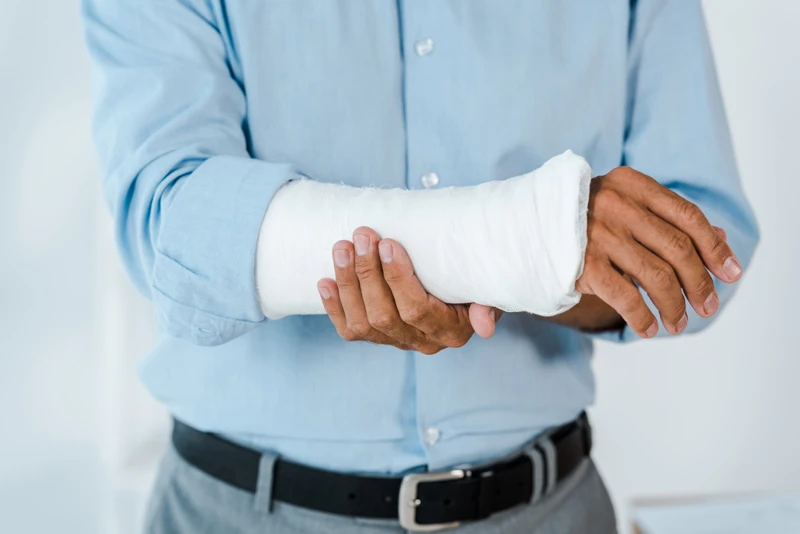
In a recent case that reflects how an injury may not seem serious at first, a client experienced a fall on defective steps in a small commercial building while walking down from her second-floor apartment. At the time, she did not seek immediate medical attention, but her ankle pain progressively worsened, leading her to visit the emergency room 22 days later. She was diagnosed with a bi-malleolar ankle fracture and ultimately underwent surgical repair several months after the incident. The defense argued that the delay in treatment suggested the injury may have occurred elsewhere. However, through the use of an eyewitness statement, the timing and circumstances of the fall were corroborated. The case was resolved prior to litigation with a settlement in the six-figure range, illustrating how questions about delayed symptoms can become a central issue in evaluating injury claims.
A Balanced Approach Moving Forward
Car accidents do not always fit neatly into categories of “serious” or “minor.”
Some are immediately clear. Others unfold over time.
A balanced approach recognizes both possibilities — without assuming the worst, and without ignoring what may develop later.
Paying attention to your body.
Taking simple steps to document what happened.
Allowing space to ask questions if something does not feel right.
These are small actions, but they can make a meaningful difference in how clearly a situation is understood.
Car Accident Guidance in White Plains
In a place like White Plains, where traffic patterns shift with the seasons, accidents are an inevitable part of daily life.
When an accident does not seem serious, it is natural to move on quickly.
But staying informed and aware can help prevent uncertainty later on.
The goal is not to overreact.
The goal is clarity.
Final Thoughts
A car accident that feels minor at first can still raise questions later.
Understanding that possibility — and knowing how to respond if it happens — allows you to make decisions thoughtfully rather than reactively. I
f you or someone you know has been involved in a car accident in White Plains and questions come up afterward — whether immediately or days later — it may be helpful to have a conversation.
James C. Freeman of Kent Hazzard & Freeman offers a free initial consultation to review your situation, explain how these cases are typically evaluated under New York law, and help you understand your options.
You can call (914) 948-4700 or email jfreeman@kenthazzard.com to start the conversation.